



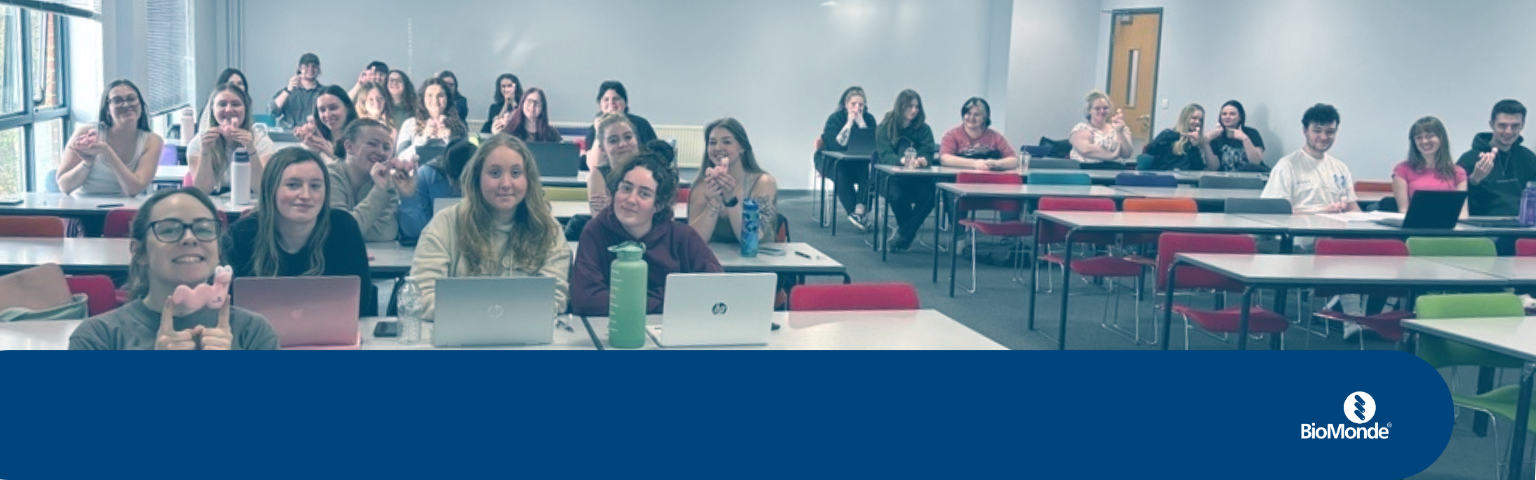
In March, our Clinical Support Manager and Nurse, Vicky, headed to Nottingham University to deliver a hands-on masterclass to veterinary students preparing to enter clinical practice and looking to expand their knowledge of Larval Therapy. The session focused on Larval Therapy’s place in modern wound care and why it should be considered a first-line option for debriding wounds in animals.
Larval Therapy may not be the first method of debridement that comes to mind for newly qualified vets, but hopefully, after Vicky’s talk, they will understand that it should absolutely be considered, as when used appropriately, it is one of the most effective ways to debride wounds while preserving healthy tissue.
The Masterclass
During the session, Vicky spoke in depth about Larval Therapy, beginning with an overview of the unique BioBag design, which houses sterile larvae and allows for controlled and targeted application to the wound site. She covered all aspects of using BioBag – as many know it, the ‘tea bag’ – from practical placement and daily maintenance to removal and aftercare. The group also discussed the benefits of Larval Therapy and addressed common misconceptions, ensuring students are equipped with the facts so they can make informed decisions in the moment and confidently discuss the treatment with pet owners.
Supporting New Talent
One of the most rewarding parts of the session was the students’ outstanding engagement. Throughout the masterclass, they shared insights and asked thoughtful questions, giving Vicky the opportunity to provide her expert perspective.
With veterinary care being a growing category for us, we welcomed this opportunity to raise awareness of Larval Therapy as an effective alternative to traditional debridement methods.
The team aims to expand its reach to veterinary and clinical universities to further support the development of the next generation of clinicians.